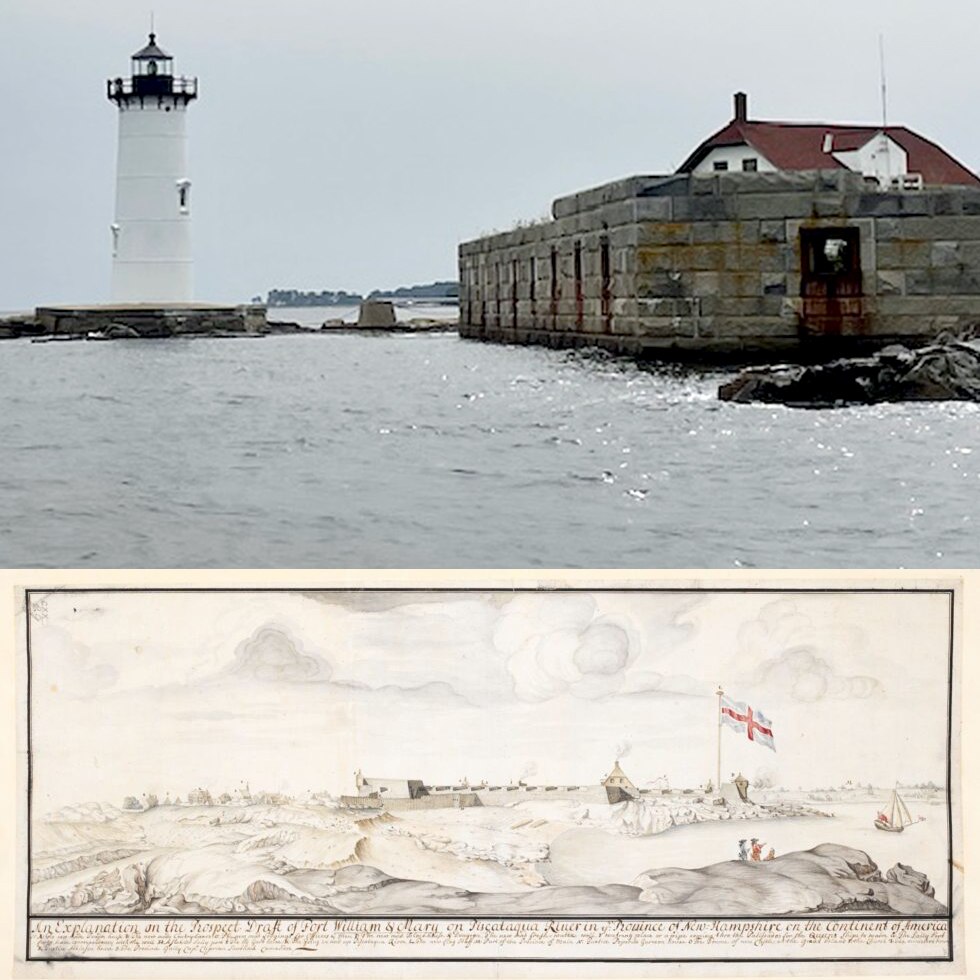
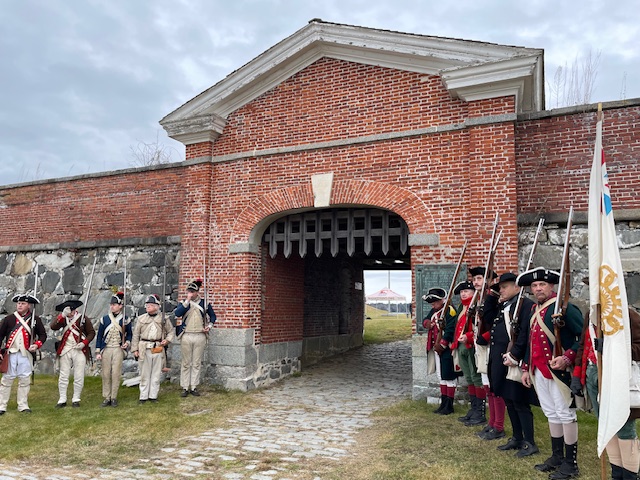
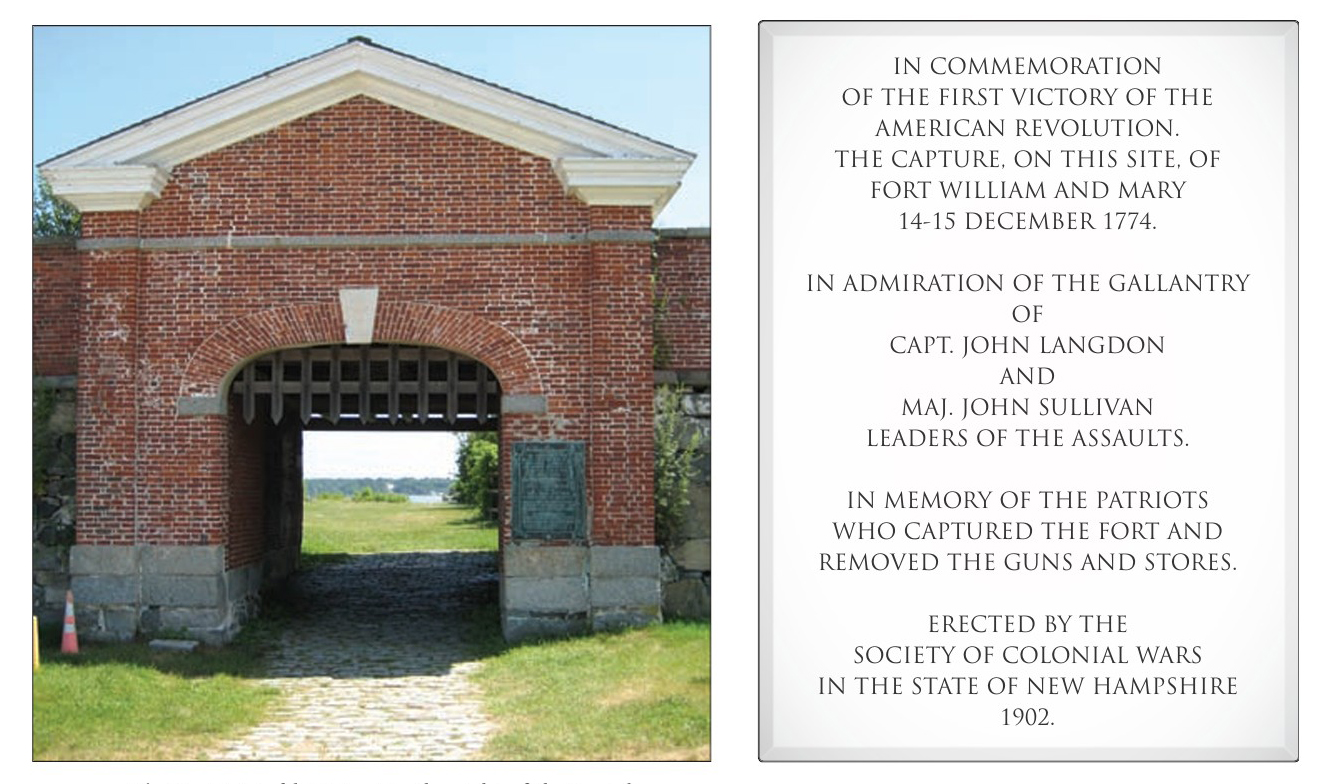
The Fort William and Mary (renamed Fort Constitution in 1791 – shown right) was the site of significant raiding leading to Revolution. The incidents are significant as one of the first overt acts of the American Revolutionary War and the only battle to take place in the state of New Hampshire
The British had built the fort which they named “The Castle” in 1632 on Great Island, at the mouth of the Piscataqua River estuary. The fort housed several small pieces of artillery to protect settlements from pirates, and later, French raids. On May 30, 1693 the people of Great Island were issued a charter for New Hampshire’s fifth town, named New Castle. The Castle was renamed Fort William and Mary.
On the eve of the revolution, only six British soldiers were garrisoned at the fort. Alerted by Paul Revere to “imminent British punitive actions in and around Fort William and Mary”, 400 men from Portsmouth, Rye and New Castle easily captured the fort on December 14, 1774. The next day, Major John Sullivan again returned to the fort with about seventy men. The attacks yielded powder, flints, bullets, cannon, shot and other military supplies. The British recaptured the fort on December 19 after anchoring the HMS Scarborough offshore. The ship remained at the garrison, serving as a deterrent against further aggression, until August 23, 1775.
The fort was quiet for the duration of the Revolutionary War and in 1808, under national administration, became Fort Constitution.