Colonial History
A northern outpost in the contests that shaped North America
Shown above Lake Jericho, a northern logging area in colonial New Hampshire
Settlements, frontiers, conflicts and service
Portsmouth, Dover, Exeter, and Hampton anchored early settlement. The colony’s soldiers, civic leaders, ministers, traders, and families endured repeated wars and shifting imperial contests while helping build the institutions that later generations inherited.
The colony furnished soldiers and leaders in the expedition against Louisbourg in 1745, gave rise to figures such as Captain John Lovewell and his Rangers, and stood as a northern outpost in the contests that helped determine the future of North America.
Refer to The Society of Colonial Wars History & Reading List and Timeline for a broader perspective of our Colonial History in early America.
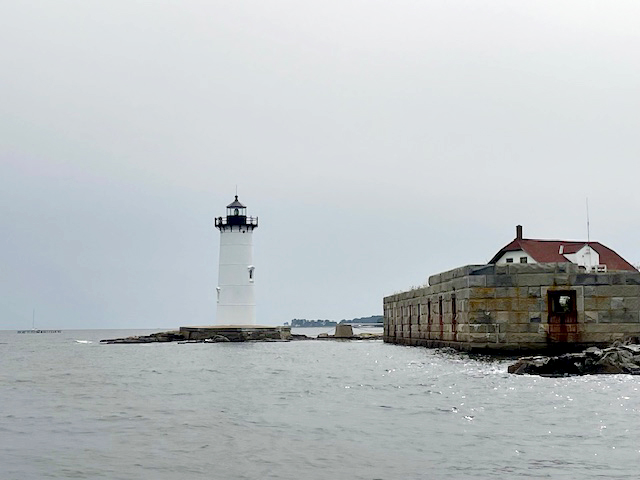
The Fort William and Mary (renamed Fort Constitution in 1791 – shown above) was the site of significant raids leading to Revolution. Read More
Colonial Timeline
Early Milestones in New Hampshire's colonial story
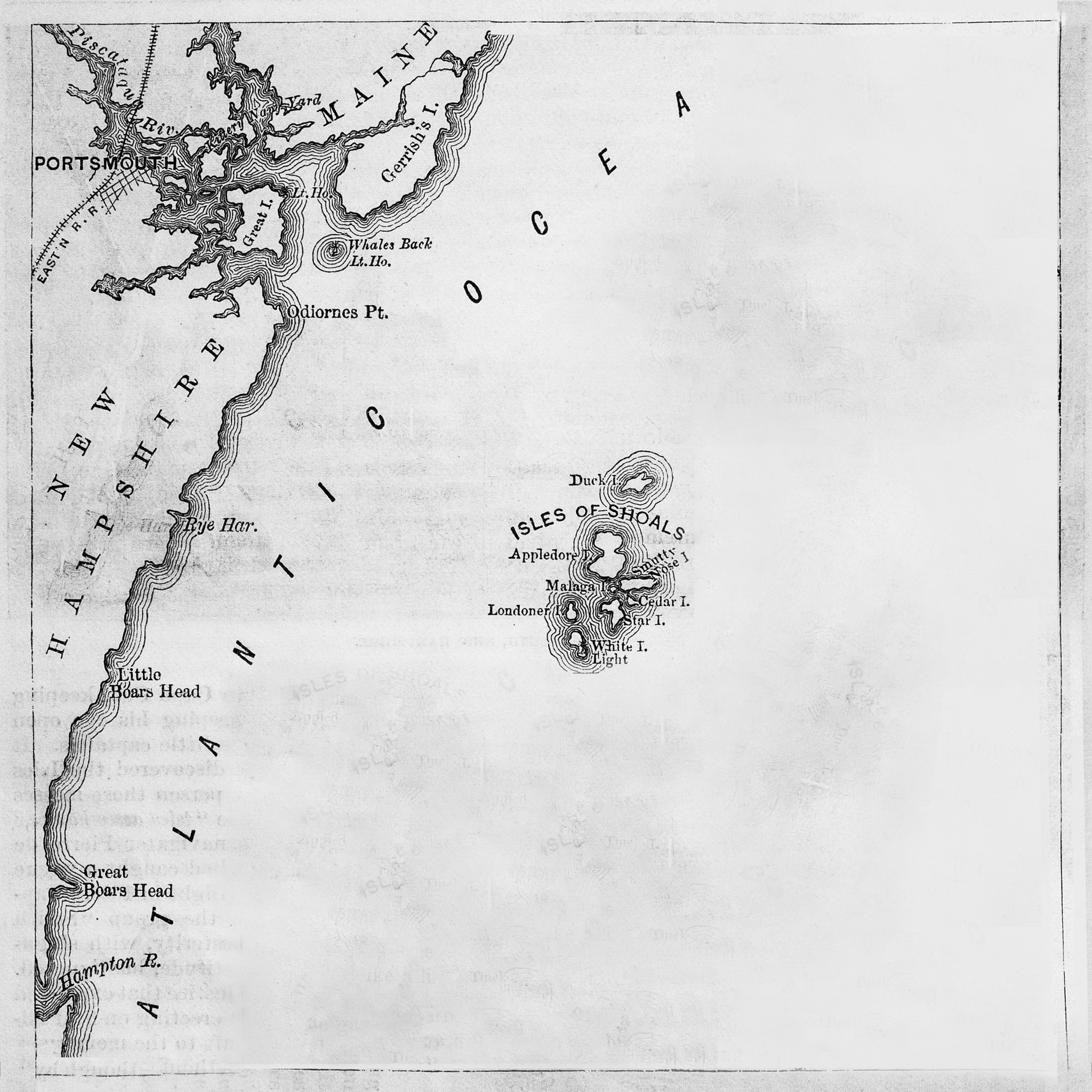
Captain John Smith explored and mapped the coastlines of present-day Maine and Massachusetts Bay in 1614. On the 1616 map of his creation he named the area New England, a selection approved by Prince Charles of England. Smith visited nine islands lying about six miles offshore of Portsmouth and named them Smith’s Isles, now known as the Isles of Shoals. Half of the islands lie in the New Hampshire town of Rye, including Star Island, and the remainder in the State of Maine. In 1864 Reverend Daniel Austin built a monument on Star Island to commemorate the 250th anniversary of Captain Smith’s visit. In 1914 it was rebuilt by the Society of Colonial Wars in the State of New Hampshire and a new bronze tablet was erected.
Heading to Revolution
Click the timeline subject for its story
1603 - Martin Pring Explores the New England Coast
In 1603, English navigator Martin Pring led one of the earliest recorded English expeditions to explore the coast of what would later become New England. Sailing from Bristol, England, Pring commanded two vessels, the Speedwell and the Discoverer, on a voyage intended both to explore the region and to identify opportunities for trade.
Pring’s expedition traveled along portions of the northeastern coast of North America, examining harbors, rivers, and potential trading locations. The party entered several waterways and made contact with Indigenous peoples encountered during the voyage. Pring and his crew were particularly interested in sassafras, which was then highly valued in Europe for its supposed medicinal properties.
Although historians continue to debate the precise locations associated with portions of Pring’s voyage, his expedition is significant to the early history of northern New England. It was among the voyages that expanded English knowledge of the coastline and its natural resources in the years immediately preceding permanent English settlement.
Pring’s 1603 exploration therefore belongs to the earliest chapter of New Hampshire’s colonial story. During this period, the region was still largely unknown to Europeans, but was increasingly visited by English explorers, fishermen, and traders whose voyages would eventually lead to colonization and permanent settlement.
1605 - Samuel de Champlain Records Coastal Exploration
In 1605, French explorer and cartographer Samuel de Champlain took part in an expedition along the coast of what is now northern New England. Sailing south from the French settlement at Port Royal in present-day Nova Scotia, Champlain explored and carefully documented portions of the coastline as the French sought suitable locations for settlement and a better understanding of the region.
Champlain was an accomplished mapmaker and observer. During his voyages, he recorded coastal geography, harbors, rivers, islands, and other prominent features, and described the Indigenous peoples and communities the expedition encountered. His maps and written accounts became some of the earliest detailed European records of the New England coast.
During the 1605 expedition, Champlain traveled along the coasts of present-day Maine and New Hampshire before continuing southward. His observations contributed substantially to European geographic knowledge of the region at a time when the coastline was still imperfectly understood and competing European powers were beginning to take greater interest in northeastern North America and its countless resources.
Champlain’s exploration did not result in a French settlement in New Hampshire, but his records provide an important early account of the region before permanent English colonization. His 1605 voyage represents another step in the growing European exploration and documentation of the lands that would eventually become New Hampshire.
1614 - Captain John Smith visits the Isles of Shoals
Long before permanent English settlement began in New Hampshire, European fishermen and explorers were already familiar with the rich waters off the northern New England coast. By the early seventeenth century, fishing vessels regularly crossed the Atlantic in search of cod and other valuable resources, while explorers including Martin Pring and Samuel de Champlain had charted portions of the region. In 1614, Captain John Smith, already famous for his role in settling Jamestown, Virginia, joined this growing exploration of the northern coast.
Smith crossed the Atlantic as part of a commercial expedition seeking fish, whales, furs, and other resources. While other members of the expedition concentrated on fishing, Smith explored and mapped the coastline from present-day Maine southward. During this voyage, he visited the group of nine rocky islands lying several miles off the present-day New Hampshire and Maine coast that fishermen knew as the Shoals. Impressed by the islands, Smith called them “Smith’s Isles.”
In his 1616 Description of New England, Smith described “Smyths Iles” as a distinctive group of rocky islands lying off the coast near Mount Agamenticus. Although he noted their barren and rugged character, Smith was enthusiastic about the possibilities offered by the surrounding region. He famously wrote of New England that, given the means to establish a colony, “I would rather live here than anywhere.” His published map and account promoted the region to English readers and helped popularize the name New England for the lands he had explored.
The name “Smith’s Isles” did not endure, and the islands remained known as the Isles of Shoals. Today the group straddles the boundary between New Hampshire and Maine, approximately seven miles offshore. Smith never returned to New England, despite later attempts, but his 1614 voyage became an important chapter in the region’s exploration. Three centuries later, in 1914, the Society of Colonial Wars in the State of New Hampshire placed a monument to Captain John Smith on Star Island commemorating his visit to the Isles of Shoals and restored the monument in 2014 for the voyage’s 400th anniversary.
1623 - Early English Settlement Begins Near the Piscataqua
The year 1623 is traditionally regarded as the beginning of permanent English settlement in New Hampshire. The earliest settlements developed around the Piscataqua River and its tributaries, the waterways that would eventually connect communities including Portsmouth, New Castle, Rye, Newington, and Dover, as well as Kittery and Eliot in present-day Maine. These early settlements were closely tied to fishing, trade, timber, and the natural harbor provided by the Piscataqua.
Sir Ferdinando Gorges and Captain John Mason had received rights to lands in northern New England from the Council for New England. Under their subsequent division of interests, Mason became associated with the territory lying south of the Piscataqua. At the time, Mason was governor of Portsmouth in Hampshire, England, and the name New Hampshire was eventually applied to his American territory in honor of his home county.
In 1623, David Thomson arrived with his wife, Amias, their young son John, and a small company of settlers. They established a settlement called Pannaway at what is now Odiorne Point in Rye, near the mouth of Little Harbor and just south of the main entrance to the Piscataqua River. Sheltered by the surrounding coastline and marshes and well positioned for drying and processing fish, Pannaway reflected the commercial purpose of much of New Hampshire’s earliest English settlement. European fishermen had worked the waters of the North Atlantic for generations, and seasonal fishing stations had already appeared along the coast and at the Isles of Shoals. Pannaway, however, represented an important transition toward permanent settlement.
These early communities differed in important ways from the Puritan settlements that later expanded northward from Massachusetts. New Hampshire’s first English settlers had come principally to fish, trade, and establish commercial communities rather than to create a religious commonwealth. A later story captures that distinction particularly well. When a Puritan minister is said to have asked his New Hampshire congregation why they had come to the New World if not to be saved, an old settler reportedly answered simply: “Us’n came to fish and trade.” Whether remembered as history or tradition, the remark captures the practical, commercial spirit that characterized New Hampshire’s earliest English settlements.
1642 - Major Richard Waldron Establishes an Early New Hampshire Sawmill at Cochecho
In 1642, Major Richard Waldron established an early sawmill at the Lower Falls of the Cochecho River, providing much-needed cut lumber for the houses, barns, and other structures of the growing English settlement. The Cochecho River flows into the Piscataqua north of Portsmouth, and the settlement along its banks would become part of present-day Dover. Harnessing the river’s waterpower for milling helped support the expansion and increasing permanence of English settlement in the region.
Waldron had emigrated from England to Massachusetts during the Great Migration and, by 1640, had moved north to Cochecho. There he acquired land and established a sawmill, gristmill, and trading interests, rapidly becoming one of the settlement’s leading citizens. By 1650, he was among Dover’s most heavily taxed residents, reflecting his growing prosperity and prominence. In 1657, Waldron was elected to represent Dover in the Massachusetts General Court, where he would continue to represent the community for many years.
During King Philip’s War, Waldron initially sought to maintain peaceful relations with the local Penacook people, with whom the English settlers had longstanding trading relationships. Their sachem, Wonalancet, like his father Passaconaway before him, generally favored peaceful relations with the English. In July 1676, the Penacook and English settlers entered into an agreement, known as the Treaty of Cochecho, which was intended to preserve peace amid the violence spreading throughout New England.
That peace was soon severely tested. Approximately 200 Indigenous men, including warriors from Massachusetts who had traveled north and sought refuge among Native communities near Cochecho, were present in the area when Massachusetts authorities demanded the capture of those who had fought against the English. Not wishing to alienate his Penacook friends while also facing pressure to apprehend the wanted men, Waldron devised a ruse by which the suspected combatants could be identified and taken into custody. He staged a mock battle, during which the Native participants were induced to surrender their arms, after which they were surrounded and detained.
Waldron’s ruse proved both ill-conceived and duplicitous. Those determined to have fought against the English in Massachusetts were sent as captives to Boston, where several were executed and others were sold into slavery overseas. Although many local Penacooks were ultimately released, the manner in which the arrests were carried out created lasting resentment. The Penacooks and other Native people believed that men who had sought refuge among them had been betrayed by Waldron and the English. The memory of the incident contributed to a profound loss of trust in Waldron and further damaged relations between Native communities and the English settlers in the years that followed.
1689 - The Cochecho Massacre and the Death of Major Richard Waldron
In the years following King Philip’s War, relations between the English settlers at Cochecho and the Penacook people continued to deteriorate. The events of 1676, when Major Richard Waldron used a mock battle to disarm Native men at Cochecho and sent suspected combatants to Massachusetts authorities, had created deep and lasting resentment. Additional disputes over trade, land, and the expanding English presence further strained relations. By the 1680s, the Penacook were led by Kancamagus, a grandson of the respected sachem Passaconaway, and the relative peace that had once existed along the Cochecho had largely disappeared.
The English settlers were well aware of the growing danger. Garrison houses and other fortified structures were established throughout the Dover area to provide places of refuge during attacks. Nevertheless, on the night of June 27, 1689, Native women who were familiar to the settlers were permitted to enter several of the fortified homes at Cochecho. During the night, they opened the doors and admitted waiting warriors. The resulting surprise attack overwhelmed several of the garrisons and homes before their occupants could organize an effective defense.
Major Richard Waldron, then approximately seventy-four years old, was attacked in his own garrison house. According to traditional accounts, Waldron attempted to defend himself with his sword but was overpowered and killed. Later histories describe his attackers as settling old grievances against him, including his role in the deception of 1676 and accusations of unfair dealing at his trading post. Tradition holds that as they struck him with his own sword, they declared that they were “crossing out” their accounts with him—a grim reference to the commercial disputes and grievances that had accumulated over many years. Waldron’s house was subsequently burned.
By the end of the attack, twenty-three English settlers had been killed and twenty-nine taken captive, while homes, mills, and other property were destroyed. The losses represented approximately one-quarter of Cochecho’s population and dealt a severe blow to the settlement. The events of June 1689 became known locally as the Cochecho Massacre, but they were also part of a much longer and more complicated history of warfare, dispossession, broken agreements, retaliation, and mistrust between English settlers and the Indigenous peoples of northern New England. The attack and the death of Richard Waldron remain among the most consequential episodes in the colonial history of Dover and New Hampshire.
1745 - New Hampshire Men Join the Expedition Against Louisbourg
During King George’s War, New Hampshire joined the other New England colonies in an ambitious expedition against the French fortress of Louisbourg on Cape Breton Island. The heavily fortified harbor guarded important French shipping and fishing interests in the North Atlantic and New England colonists viewed it as a serious threat to their maritime trade and security.
Hundreds of New Hampshire men took part in the campaign, with soldiers drawn from communities including Portsmouth, Dover, Hampton, Exeter, New Castle, Rye, Kingston, Greenland, Newington, New Market, Durham, and Londonderry. Serving alongside larger contingents from Massachusetts and Connecticut, they joined a predominantly provincial army composed largely of ordinary colonists rather than professional soldiers.
After landing on Cape Breton in the spring of 1745, the New England forces laid siege to Louisbourg under difficult conditions of cold, rain, mud, disease, and persistent enemy fire. Provincial troops hauled heavy artillery across marshy ground, constructed batteries and siege works, and helped bring captured French guns into action. Supported by a British naval blockade, the colonial forces gradually overwhelmed the fortress’s defenses.
Louisbourg surrendered in June 1745, giving the colonies one of their most celebrated military victories of the colonial era. Although Britain returned the fortress to France under the Treaty of Aix-la-Chapelle in 1748, the campaign showed that the New England colonies, including New Hampshire, could raise men and resources for a major military undertaking. The names preserved on New Hampshire’s Louisbourg muster rolls remain a record of the colony’s contribution to this remarkable colonial victory.
1774 - New Hampshire Patriots Raid Fort William and Mary
In December 1774, months before the fighting at Lexington and Concord, New Hampshire colonists took one of the earliest armed actions against British authority in the years leading to the American Revolution. Fort William and Mary, situated at the entrance to Portsmouth Harbor in New Castle, contained gunpowder, cannon, and small arms belonging to the Crown. Amid growing fears that British authorities intended to secure colonial military stores, local patriots determined to seize the fort’s supplies before they could be removed or reinforced.
On December 14, several hundred men from Portsmouth and surrounding communities, led by John Langdon and others, descended upon the fort. Its small royal garrison, commanded by Captain John Cochran, attempted to resist but was quickly overwhelmed. The colonists entered the fort and removed approximately one hundred barrels of gunpowder, carrying the valuable stores away to locations where they could be concealed from British authorities.
The following day, another party of colonists, including John Sullivan, returned to the fort and removed additional military supplies, including muskets and cannon. Governor John Wentworth protested the raids and appealed for British assistance, but by the time Royal Navy vessels arrived in the Piscataqua, the captured stores had already been dispersed. Some of the gunpowder taken from the fort was later carried by New Hampshire troops during the opening months of the Revolutionary War, traditionally including supplies used during the Battle of Bunker Hill in June 1775.
The raids on Fort William and Mary marked a significant escalation in New Hampshire’s resistance to royal authority. More than four months before Lexington and Concord, New Hampshire colonists had forcibly entered a royal fort, confronted British soldiers, and seized Crown military supplies in preparation for possible conflict. The events of December 1774 therefore occupy an important place in New Hampshire’s colonial and revolutionary history, demonstrating that its transition from political protest to armed resistance was already underway.