Subject of Interest
Phineas Stevens and the Defense of the Fort at Number Four
A Story of Captivity, Courage, and Life on New Hampshire's Colonial Frontier
Along the Connecticut River in what is now Charlestown, New Hampshire, stood one of the most important outposts on New England’s northern frontier: the settlement known simply as Number Four. During the turbulent decades of the eighteenth century, this remote community stood between the established English settlements to the south and the contested wilderness stretching north toward Canada. Its history is inseparable from one remarkable colonial soldier and frontiersman, Captain Phineas Stevens.
Stevens’s experience with the dangers of frontier life began long before his arrival at Number Four. Born in Sudbury, Massachusetts, in 1706, he was still a boy when violence profoundly altered the course of his life. On August 14, 1723, Phineas was traveling with members of his family when they were ambushed by Native warriors. His father escaped, but his brothers Joseph and Samuel were killed and scalped. Phineas and his younger brother Isaac were taken captive and carried north toward Canada.
During the difficult journey, the younger Isaac became exhausted and struggled to continue. Phineas reportedly carried his brother on his back, saving him from being killed and left behind. Their father subsequently made journeys to Canada seeking the return of his sons, and the boys were eventually redeemed from captivity. The experience gave the young Stevens an intimate understanding of the dangers, hardships, and complexities of life along the northern frontier—knowledge that would become particularly significant later in his life.
Number Four: An Outpost on the Frontier
Stevens eventually became one of the early settlers of Number Four, the northernmost of a series of townships established along the upper Connecticut River. Although the settlement was formally named Charlestown, its inhabitants continued for many years to affectionately call their community simply Number Four.
Its location gave the settlement an importance far beyond its modest size. During the recurring conflicts between Britain and France for control of North America, the Connecticut River valley offered a natural corridor between New England and Canada. Number Four consequently became both a community and a military outpost, vulnerable to attack but strategically important to defending settlements farther south.
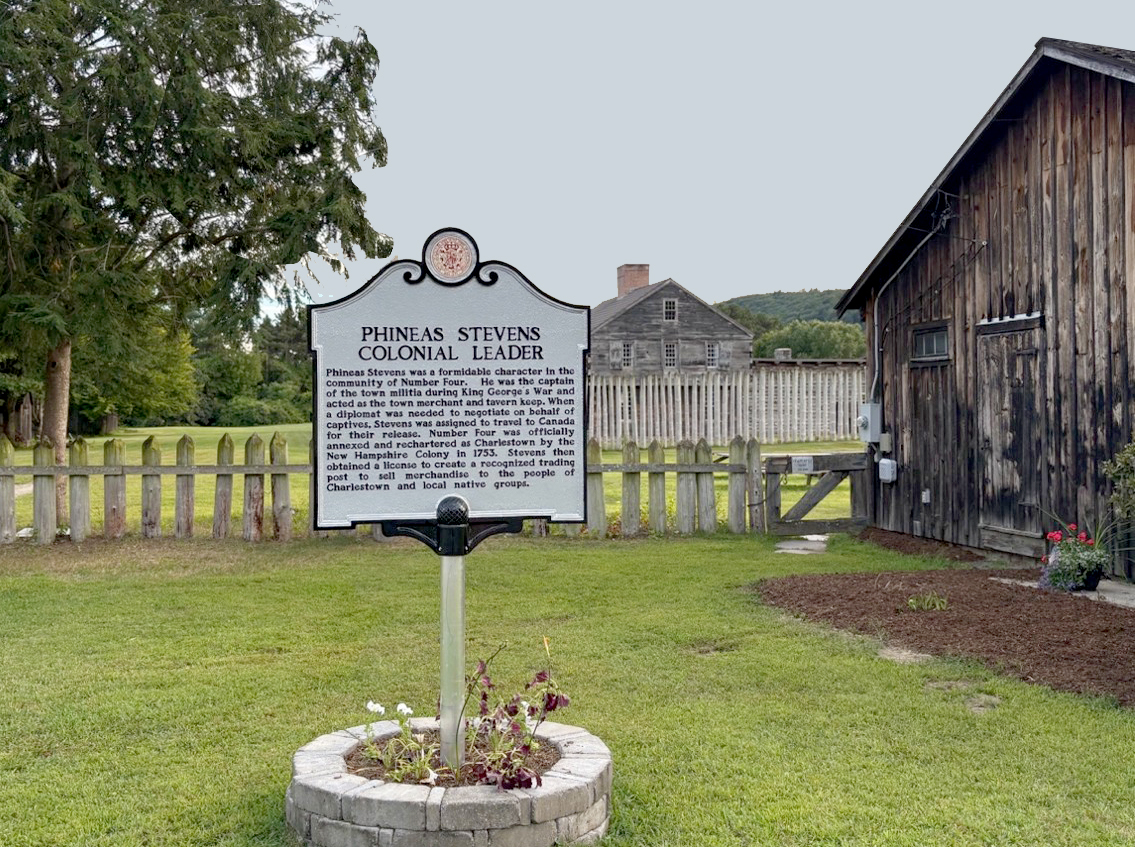
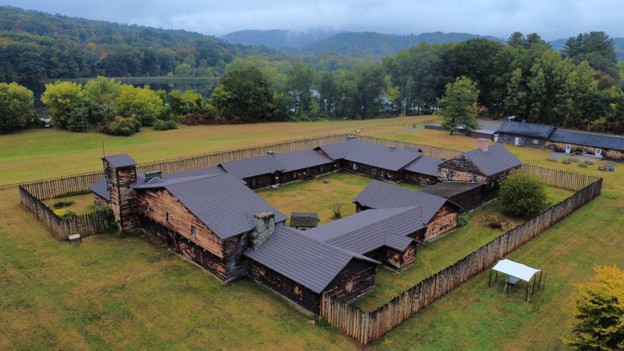
A fortified enclosure was constructed there, and Stevens became closely associated with its defense. He served as a militia officer and emerged as one of the community’s leading figures. His defining moment came during King George’s War in the spring of 1747.
The Siege of 1747
On April 7, 1747, a large force of French troops and their Native allies appeared before the fort. Inside were Captain Stevens and approximately thirty men.
For three days, the defenders endured musket fire and repeated attempts to destroy the fort. The attackers tried to set the wooden defenses ablaze, while Stevens and his men worked constantly to extinguish the fires. Despite being greatly outnumbered and isolated on the frontier, the garrison refused demands that it surrender.
Stevens later described the ordeal in an account of the siege. When the attackers finally withdrew on April 10, the fort remained in English hands. Remarkably, Stevens had successfully defended Number Four without losing a single man in the engagement.
News of the defense spread, and Stevens’s conduct earned considerable admiration. According to longstanding tradition, Sir Charles Knowles of the Royal Navy was so impressed by Stevens’s defense that he presented him with a sword. In gratitude, the settlers subsequently named the community Charlestown in Knowles’s honor.
The defense of Number Four became one of the celebrated episodes of warfare on the New England frontier. It demonstrated not only Stevens’s leadership, but also the extraordinary resilience required of the families and soldiers who established communities along the contested edges of colonial New Hampshire.
A Strategic Crossroads
The importance of Number Four did not end with Stevens’s defense.
During the French and Indian War, the fort became an important staging and supply point for British and provincial forces operating toward Lake Champlain and Canada. Its strategic value is illustrated by another figure who would later become one of New Hampshire’s most celebrated soldiers: John Stark.
Years before Stark gained fame during the American Revolution, he served on the northern frontier during the French and Indian War. As part of the British campaign against Canada, Stark was directed to help establish a military road connecting the Connecticut River frontier with the Lake Champlain region. The route improved the movement of soldiers and supplies through country that had previously been exceedingly difficult to traverse.
Thus the history of Number Four stretches well beyond a single battle. The fort occupied an important position in the network of settlements, roads, rivers, and military posts through which the struggle for control of northern New England was conducted.
Public Memory
Remembering Phineas Stevens
Commemorative plaque donated to the Fort at No. 4 by the Society of Colonial Wars in the State of New Hampshire.
Phineas Stevens continued his military service after the celebrated defense of the fort. His life, however, would end far from the settlement with which his name became so closely associated. In 1756, during the French and Indian War, Stevens died at Halifax, Nova Scotia while serving in another expedition against the French.
His story embodies many of the experiences shared by the inhabitants of colonial New Hampshire’s frontier: settlement and warfare, captivity and survival, family tragedy, military service, and the persistent effort to establish communities in a region contested by competing peoples and empires.
The boy who once carried his exhausted younger brother through the wilderness grew into the officer who stood with a small garrison against an overwhelming force at Number Four.
Today, the reconstructed Fort at Number Four preserves the memory of the community that developed along the Connecticut River and of the generations who lived through the conflicts that shaped colonial New England. Among their stories, Captain Phineas Stevens’s remains one of the most compelling. His is a story of endurance, leadership, and courage on New Hampshire’s colonial frontier.
For further information about Phineas Stevens and The Fort at No. 4, visit the museum’s website.